What Is Uncensored AI Video?
Think about this – you’re a filmmaker with no money, a grand idea and a laptop. Several years ago that was as useful as a pair of plastic sunglasses. Today it might be enough to go somewhere!
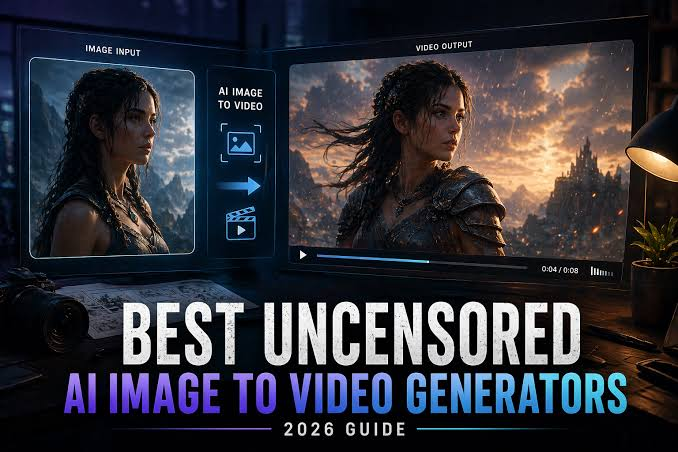
Uncensored AI video is AI generated video content created outside of the content boundaries imposed by most mainstream tools. While most commonly available AI video applications have censorship filters built-in – blocking out certain subjects, aesthetics or visual ideas that are deemed inappropriate for general audiences – uncensored versions remove the constraints
That doesn’t inevitably entail the explicit and the damaging. It means most commonly talking about stuff with a more daring edge, political imagery, or visual styles that would be turned away by normal tools.
The Filter Problem Nobody Talks About
Here’s what mainstream tech coverage tends to miss: creative censorship isn’t always obvious. Maybe an AI tool won’t produce a battle scene. Maybe a stylized image of a protest. Maybe the depiction of a historical atrocity for a documentary project. Their rejections aren’t arbitrary-they are the work of content policies written to insulate corporations from legal liability.
For journalists, teachers, artists and independent film-makers those limitations are a real blow. A documentary maker, attempting to stand a conflict area, receive the same refusal to produce as the one that is trying to create something significantly damaging. It’s an issue. Uncensored AI video’s solutions to this issue specifically.
Why People Are Gravitating Toward It
The appeal is not just crossing lines. It’s crossing cul-de-sacs.
Traditional video creation is costly. A professional shoot alone can cost thousands even before a single clip is shot, let alone edited. AI generated video reduces that cost to zero, and uncensored versions reduces it further by removing the “I’m sorry I can’t do that” barrier.
I see the independent creators diving right in. Short film makers, YouTube essayists, game developers packing in cut-scenes, musicians craving their own cool video clips-all are naturally finding it useful. It provides a way for small teams to punch well above their weight.
There is also a political and philosophical realm behind all this. Increasingly, creators think that if a model is censoring as to what can and can’t be created, it is because that’s how the people who created them think. A decision made by a Silicon Valley company about the restrictions on a certain imagery…–that decision goes worldwide, regardless of cultural or political differences; –has perfectly valid motivations for their project.
The Technical Side, Briefly
Uncensored ai video models are usually trained by taking a pretrained text-to-video or image-to-video neural network and continue training on uncensored datasets, without the filtering used when the model was initially trained. The pretrained models-usually open-source models from a research institution and made available through open repositories by the time the technology is released-then get further altered and redistributed, or self-hosted.
This local implementation is really important in this context. The fact that the application is installed on your own machine means that a distant company server can’t just intercept your prompt and answer with a “nope” back. This is one of the reasons why the open-source AI world took to uncensored models so eagerly.
Where the Real Risks Live
Let’s face it. Most users of uncensored AI video won’t have all that lofty creative aims. The same tools that allow a documentary movie-maker to reconstruct actual images from the past will enable the bad actor to produce effective disinformation. Tech like deepfake, a form of uncensored AI video already in use, has already been implicated in tangible social harms.
This is never going to end. This is an impossible, contentious issue and free-thinking, innocent human beings-those just looking for a little entertainment-are about to get in trouble. Zero restrictions are dangerous. Complete restrictions are oppressive.
Most well-established providers of uncensored AI video editors attempt to draw this line by banning certain types of content – child abuse material, targeted harassment – and leaving general creative uses alone. Who knows if that compromise can hold in the long run.
The Broader Shift in AI Content Creation
There is something going on beneath the surface of this debate. Observing a slow motion crash between two philosophies. In one corner are AI companies, that generally believe that the map is a powerful tool that requires strong guides, managed through a centralized platform with accountability frameworks in place. In the other, do-it-yourself enthusiasts who believe information, creative tools and content should therefore flow freely, with trust in individual audiences rather than institutional gatekeepers.
Uncensored Ai video is at the heart of that impact.
The explosion in popularity isn’t just for thrills – it’s the desire for creative tools that respects the artist’s vision. For a filmmaker who every time has an AI turned down for the equivalent of, “Sorry, we can’t process that,” an uncensored tool isn’t a hack, it’s salvation.
What Comes Next
Anticipate the space to be more crowded and more competitive all at once. Regulators in Europe and elsewhere are already examining AI-generated content with renewed attention. Policies on platforms will become more restrictive in some regions and less restrictive in others.
Of course, the hardware keeps innovating, too. Filming quality that would’ve seemed completely unrealistic just a couple of years back, now looks incredibly real. That race only goes forward.