
How Market Uncertainty Can Reveal Investment Opportunities
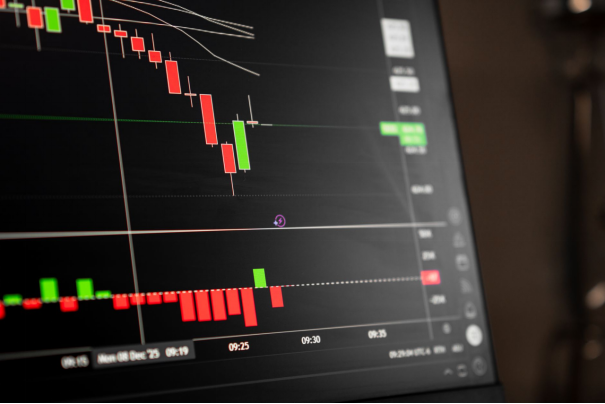
Market swings often create the same question for investors: does uncertainty signal danger, or does it open a better entry point? The answer depends less on the size of a price move and more on whether a portfolio has rules strong enough to separate temporary stress from lasting damage. A disciplined approach to market volatility is what distinguishes a structured investment process from reactive decision-making.
Photo by Alex Luna on Pexels
The Double-Edged Nature of Market Swings
Volatility cuts in 2 directions. A 10 percent index decline can reduce portfolio value quickly, but the same move can also lower prices for assets with unchanged long-term earnings power. For beginner and intermediate investors, the hard part involves judging whether price movement reflects new fundamental information or short-term pressure caused by liquidity, headlines, or positioning.
During 2026, inflation forecasts, geopolitical tension, and abrupt policy signals have kept risk assets sensitive to news. A stock that drops 5 percent across 3 trading sessions may look alarming, yet that move alone says little without context. Earnings durability, balance sheet strength, cash flow quality, and debt maturity schedules often matter more than the daily percentage change.
Defining Market Volatility and Its Role in Portfolio Management
In portfolio terms, volatility describes the rate and magnitude of price movement across a security, sector, or index. A committee assessing market volatility as a factor in asset allocation will usually focus on dispersion, correlation, and drawdown risk rather than headlines alone. A stock moving 15 percent annualized behaves very differently from an asset moving 35 percent annualized, even if both finish a quarter flat.
Historical volatility is commonly calculated using returns across a defined window, such as 20 trading days or 252 trading days. Asset allocation depends on that measurement because a classic 60 percent equity and 40 percent bond mix can behave unlike expectations if both sides fall together. Correlation shifts often matter as much as raw price movement.
Valuation Opportunities During Volatile Periods
Market stress can compress valuations faster than company fundamentals change. If a profitable business moves from 18 times forward earnings to 15 times, the multiple has contracted about 16.7 percent. That decline may reflect a weaker outlook, but it may also reflect forced selling, risk reduction, or broad sector rotation.
Geopolitical shocks show how quickly cross-asset pricing can adjust. AP described the impact of conflict on oil and stocks. That kind of event can lift energy prices, pressure transport costs, and push investors toward bonds within a single session.
Yet volatility does not always equal collapse. Reuters noted how markets handled repeated policy shocks. That 2025 pattern matters for 2026 investors because resilient markets can still contain mispriced sectors, especially where sentiment shifts faster than earnings estimates.
Preparing for Volatility: Risk Definition and Position Management
Opportunity has little value without risk limits. A portfolio that allocates 20 percent to a single volatile theme may experience significant losses if the underlying assumption proves incorrect, while a 2 percent position can leave room for reassessment. Position size often decides whether volatility becomes useful information or emotional pressure.
• Risk per position should be defined before entry, since a planned 6 percent loss limit differs sharply from an improvised reaction after a 15 percent drawdown.
• Liquidity needs should sit outside volatile assets, since 6 months of cash reserves can reduce the need to sell investments during a downturn.
• Rebalancing bands can impose discipline, since a 5 percentage point drift from target allocation gives a clear signal without constant trading.
Policy risk also deserves attention. NBC News reported that trade war fears hit stocks. Such headlines can move indexes within hours, which makes pre-set rules more useful than instinctive decisions after a sharp open.
Building Conviction as a Long-Term Investor
Market swings have a dual character: they can expose weak assumptions, but they can also create better prices for patient capital. The main points involve definition, valuation, and risk control, with each part helping investors judge whether a decline reflects opportunity or deterioration.
The opening question has a practical answer. Uncertainty can be assessed more systematically when an investor has three habits in place: a valuation framework, a position-size limit and a review process tied to fundamentals rather than short-term noise.Without those habits, volatility can turn into guesswork.
Looking ahead, investors with a 12 month horizon or longer may benefit from keeping watchlists, target valuations, and cash deployment rules updated before stress arrives. A measured plan cannot remove volatility, but it can turn market disorder into a more deliberate decision point.