
Vietnam’s Manufacturing Advantage Is Creating a New Era of Ecommerce—But Operations Will Determine Who Benefits Most
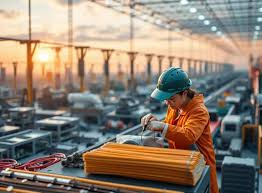
For years, discussions about Vietnam’s economic growth have centred on manufacturing. Global brands have expanded production facilities, exports have grown steadily, and the country has strengthened its position as one of Asia’s most important manufacturing hubs. Much of this growth has been driven by Vietnam’s ability to combine competitive production costs with a skilled workforce, strategic location, and increasing integration into global supply chains.
What receives far less attention, however, is how this manufacturing expansion is reshaping the country’s ecommerce landscape.
As factories produce more goods, businesses are no longer focused solely on exporting products overseas. Increasingly, they are also building stronger domestic sales channels, expanding into regional ecommerce markets, and adopting omnichannel business models that serve both consumers and business customers.
This shift creates an entirely new operational challenge.
Manufacturing scale does not automatically translate into ecommerce success.
Businesses that excel at producing products may still struggle with inventory coordination, fulfilment planning, customer order management, and distribution once those products enter digital sales channels.
In Vietnam’s rapidly evolving commerce ecosystem, operational capability is becoming just as important as production capability.
Manufacturing Growth Is Changing How Businesses Think About Commerce
Vietnam’s manufacturing sector has traditionally focused on predictable production schedules and long-term supply contracts. Inventory moved through relatively structured distribution channels, and operational planning was often based on stable customer demand.
Ecommerce introduces a fundamentally different operating model.
Instead of shipping large production volumes to a limited number of commercial buyers, businesses must now manage thousands of individual customer orders arriving across multiple channels throughout the day.
Demand becomes less predictable.
Product assortments expand.
Returns become part of everyday operations.
Delivery expectations shorten.
Inventory must support wholesalers, distributors, marketplaces, direct-to-consumer sales, and physical retail simultaneously.
The operational rhythm changes completely.
Success therefore depends not only on producing efficiently but also on moving products intelligently through increasingly complex fulfilment networks.
Why Domestic Commerce Is Becoming a Strategic Opportunity
Although Vietnam continues strengthening its export economy, domestic ecommerce has emerged as a significant growth opportunity in its own right.
Rising internet penetration, expanding middle-income households, growing smartphone usage, and increasing confidence in digital payments have encouraged more consumers to purchase online across categories ranging from electronics and fashion to groceries and home goods.
For manufacturers, this creates an opportunity to diversify revenue beyond traditional export channels.
However, serving domestic ecommerce customers requires very different operational capabilities than serving international distributors.
Consumer orders arrive continuously rather than periodically.
Inventory must remain visible across multiple sales channels.
Promotions can generate sudden demand spikes.
Customers expect accurate delivery timelines and consistent communication throughout the buying journey.
These expectations require businesses to rethink how inventory, warehousing, and fulfilment operate together.
Why Inventory Has Become a Strategic Business Asset
Many manufacturers continue viewing inventory primarily as a production resource.
Finished goods are produced, stored, and shipped according to customer requirements.
While this approach supports traditional manufacturing models, ecommerce demands much greater flexibility.
Inventory must now balance competing priorities.
Products may be reserved for export customers while simultaneously supporting domestic ecommerce sales.
Retail promotions may require temporary inventory allocation adjustments.
Regional warehouses may experience different demand patterns depending on local purchasing behaviour.
Inventory therefore becomes more than stock waiting to be sold.
It becomes a strategic asset requiring continuous operational coordination.
Businesses that maintain accurate, real-time visibility into inventory positions gain a significant advantage because they can allocate products more effectively, reduce unnecessary stock transfers, and respond faster to changing customer demand.
This is where modern inventory management Vietnam solutions become increasingly valuable. Rather than simply tracking stock quantities, they enable businesses to monitor inventory across multiple locations, synchronise availability between sales channels, and make more informed replenishment decisions based on changing demand patterns.
The result is greater operational confidence as businesses expand beyond traditional manufacturing models into more dynamic ecommerce environments.
Why Selling Through Multiple Channels Creates New Challenges
Many Vietnamese businesses are no longer relying on a single route to market.
A manufacturer may simultaneously sell through:
- Business distributors
- Retail partners
- Brand-owned ecommerce websites
- Online marketplaces
- Social commerce platforms
- Cross-border ecommerce channels
Each channel creates unique operational requirements.
Some require bulk shipments.
Others require individual parcel fulfillment.
Inventory availability must remain consistent across every sales channel despite products moving continuously throughout the network.
Without coordinated operational systems, businesses often experience overselling, duplicate inventory allocation, fulfilment delays, and increasing customer service issues.
The challenge is not necessarily inventory availability.
It is inventory coordination.
Why Order Decisions Matter More Than Ever
As sales channels expand, businesses often assume warehouse productivity will become the primary operational challenge.
In reality, many fulfillment problems originate much earlier.
Every customer order requires a series of decisions before warehouse operations even begin.
Which fulfillment location should process the order?
Can inventory be consolidated?
Should export commitments receive priority?
Is another warehouse better positioned to reduce delivery times?
Can existing inventory satisfy customer demand without affecting future production schedules?
These decisions influence every downstream activity.
Businesses that make them quickly and accurately generally achieve stronger fulfilment performance than those relying heavily on manual coordination.
This explains why many growing organisations are placing greater emphasis on centralised order orchestration.
Operational Coordination Is Becoming the New Competitive Advantage
One of the defining characteristics of successful ecommerce businesses is not simply faster fulfillment.
It is coordinated decision-making.
Operations, procurement, warehousing, sales, and customer service increasingly rely on shared operational information rather than isolated departmental reporting.
This alignment reduces unnecessary inventory movement, improves fulfilment accuracy, and allows organisations to respond more effectively as customer demand changes.
As businesses scale, these operational improvements often produce greater long-term value than expanding warehouse capacity alone.
Preparing for Regional Expansion
Vietnam’s strategic location also positions many businesses to expand beyond domestic ecommerce into wider Southeast Asian markets.
Regional expansion introduces additional complexity.
Multiple currencies.
Different customer expectations.
Cross-border logistics.
Market-specific inventory requirements.
Businesses entering neighbouring markets require operational systems capable of supporting increasingly sophisticated fulfilment networks without sacrificing visibility or consistency.
This is where Order Management Vietnam solutions play an increasingly important role. By centralising order information across sales channels and coordinating fulfilment decisions with inventory availability, businesses can manage growing operational complexity while maintaining a consistent customer experience across multiple markets.
Rather than treating each sales channel independently, organisations gain the ability to orchestrate fulfilment from a unified operational perspective.
This becomes particularly valuable as regional expansion accelerates.
The Next Stage of Vietnam’s Commerce Evolution
Vietnam’s ecommerce future will likely be shaped less by consumer demand—which continues growing steadily and more by how effectively businesses adapt their operational capabilities.
Manufacturing excellence has already established the country as a global production hub.
The next opportunity lies in transforming that production strength into efficient, scalable commerce.
Businesses that combine manufacturing capability with intelligent inventory coordination, flexible fulfilment, and integrated order management will be better positioned to compete not only within Vietnam but across Southeast Asia.
Operational maturity will increasingly determine commercial success.
read more : Remote Desktop Attack Vectors and How to Defend Against Them
Conclusion
Vietnam’s manufacturing success has created extraordinary opportunities for businesses entering ecommerce, but production efficiency alone is no longer enough.
As sales channels multiply and customer expectations evolve, organisations must build operational systems capable of coordinating inventory, fulfilment, and customer orders with far greater precision than traditional manufacturing models required.
By strengthening inventory visibility through inventory management Vietnam and improving fulfillment coordination with Order Management Vietnam, businesses can create operational foundations that support sustainable growth in both domestic and regional markets.
The companies that lead Vietnam’s next chapter of commerce will not simply be those that manufacture the most products. They will be those that move products through increasingly complex markets with intelligence, agility, and consistency.